I Loved The Artist’s Way. I Also Had Some Problems With It. So I Made My Own Workbook.
Let’s be honest. Being creatively stuck sucks.

I’m not talking about a lazy Sunday where you don’t feel like writing. I mean the kind of stuck where you open a blank page and your brain just… leaves. Where you used to have ideas in the shower, on the bus, at 3am, and now you’ve got nothing but a to-do list and a vague sense that the fun part of you packed a bag and moved out without leaving a forwarding address.
If you’re there right now, I get it. I’ve been there more times than I can count.
What Creatively Stuck Actually Feels Like
For me, it doesn’t show up as “I have writer’s block.” It shows up sideways.
It looks like scrolling for an hour and calling it research. Buying a new notebook instead of writing in the five I already own. Telling myself I’ll start that project “when things calm down,” knowing full well things are never going to calm down. And honestly? It usually shows up in my body too. When I’m creatively stuck, I’m usually also disconnected from pleasure. I’m not dancing in the kitchen. I’m not lingering in the bath. I’m not touching myself just because it feels good. Everything gets a little gray.
That’s not a coincidence, and I’ll come back to it.
The Book Everyone Recommends

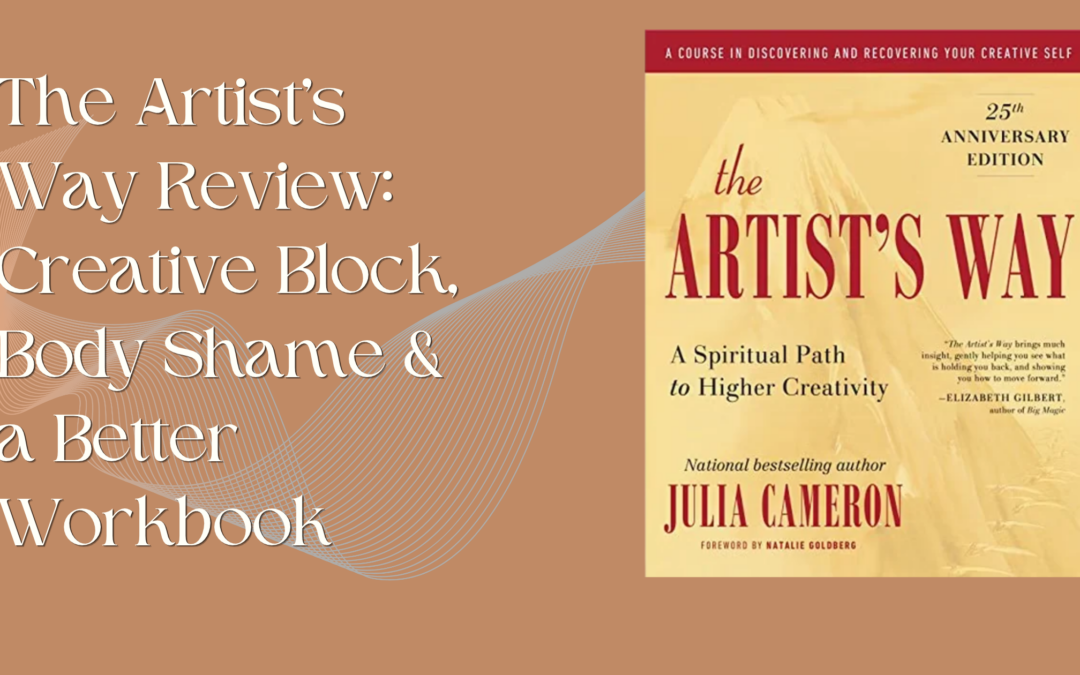
If you’ve ever told a creative friend you’re stuck, there’s a good chance they handed you a copy of The Artist’s Way by Julia Cameron. It’s basically the patron saint of creative block books. It’s been around for decades, it’s sold millions of copies, and a lot of artists swear it changed their lives.
And you know what? There’s real magic in it.
The core practices are genuinely great. Writing every morning to clear the junk out of your head. Taking yourself on solo dates just to play and fill back up. Noticing the voice in your head that tells you you’re not a “real” artist and getting a little curious about where it came from. Treating creative recovery like an actual process that takes weeks instead of a mood you’re supposed to snap out of.
Those ideas helped me. I’m not here to tell you to throw the book in the trash.
Where It Lost Me
But when I went back to it recently, some parts didn’t sit right with me anymore. And I think it’s important to say that out loud, because a lot of people feel weird about criticizing a book that’s helped so many folks.
Here’s my honest take.
Some of it felt fatphobic. There are moments where food, eating, and body size get treated like symptoms, like proof that something in you is blocked or out of whack. Listen. As a sex educator who spends a lot of time helping people unlearn shame about their bodies, that landed badly. Your body size is not a creative diagnosis. Your weight is not a sign that you’re avoiding your art. A fat body is not a “before” picture of a creative breakthrough.
Some of it felt kinda racist, or at least really narrow. A lot of the book reads like it was written for one specific kind of person: someone with money, free time, a certain kind of family support, and a certain kind of whiteness that’s just assumed and never named. The examples, the advice about time and money, the idea of who gets to be an “artist” in the first place. If you’re a person of color, working class, a caregiver, or just someone who doesn’t fit that picture, it can feel like the book isn’t really talking to you. You’re left translating everything to fit your actual life.
And for me, it was missing the body. Pleasure. Sex. Sensuality. The stuff that I think is deeply tied to creativity got left out almost completely.
You can love something and still notice where it falls short. That’s not cancel culture. That’s growth.

Creativity and Pleasure Come From the Same Place
Here’s the thing I’ve learned from years of doing sex education and running workshops: when people get disconnected from pleasure, they get disconnected from their creativity too. And when they start feeling good in their bodies again, the ideas come back.
Think about it. Creativity is paying attention. Noticing the color of the light, the way a song hits, the texture of a fabric. Pleasure is paying attention too. It’s noticing what feels good and letting yourself have it. Same muscle. Shut one down and the other goes quiet.
So when I’m stuck, I don’t just need a writing exercise. I need permission to feel good again. I need to get back into my body.
So I Made the Workbook I Wanted
That’s why I made Turned On & Tuned In: A 12-Week Creativity + Pleasure Workbook.
It’s inspired by what works in The Artist’s Way, but rebuilt from the ground up for real people with real bodies and real lives. Every body. Every size. Every gender. Every background. Every kind of weird.
Here’s what’s inside:
- 12 weeks of themes, from Permission and The Inner Critic to Pleasure as Fuel, Rest & Being High (Responsibly), Desire & Wanting Big, and Making It Public
- A pep talk from me every week, written the way I’d talk to you behind the counter
- Five journal prompts a week with space to actually write
- A “Try This” activity every week, like the Ugly Art Challenge, the Unhinged Vision Board, and the Sober vs. Lifted Experiment
- Two core practices: Brain Dump Pages (any time of day, and voice notes count) and weekly Pleasure Dates (free totally counts)
- A weekly check-in page to track your progress without turning it into a grade
- A quick prompt bank for days your brain is totally blank
What you won’t find: any idea that your body is the problem, that you need money or free afternoons to make art, or that there’s one right way to be creative.
 Who This Is For
This workbook is for you if you used to make things and stopped. If you want to make things and never started. If you’re a writer, painter, crafter, dancer, content creator, or just someone who wants to feel more alive. If you’ve ever felt like creativity advice wasn’t written for someone like you.
You don’t have to call yourself an artist. You just have to want a little more aliveness than you’ve got right now.
Get Your Copy
Turned On & Tuned In is available now. It’s a printable PDF, so you can print it, fill it out with your favorite gel pens, cover it in stickers, and make it completely yours.
Grab the workbook here
And if you do it, tag me @Makeupandsin. I want to see your ugly art, your vision boards, and your permission slips. Seriously. Let’s get unstuck together.